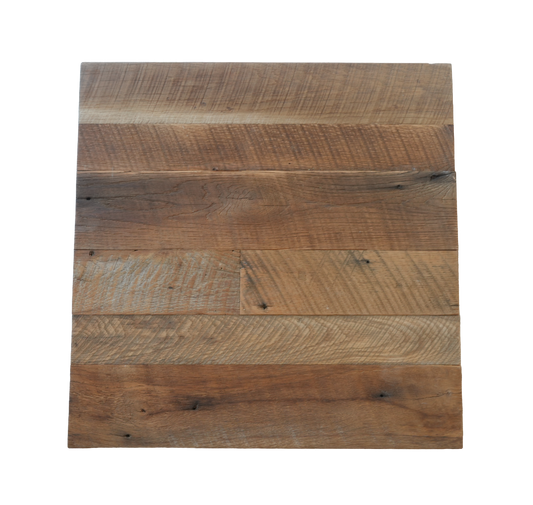
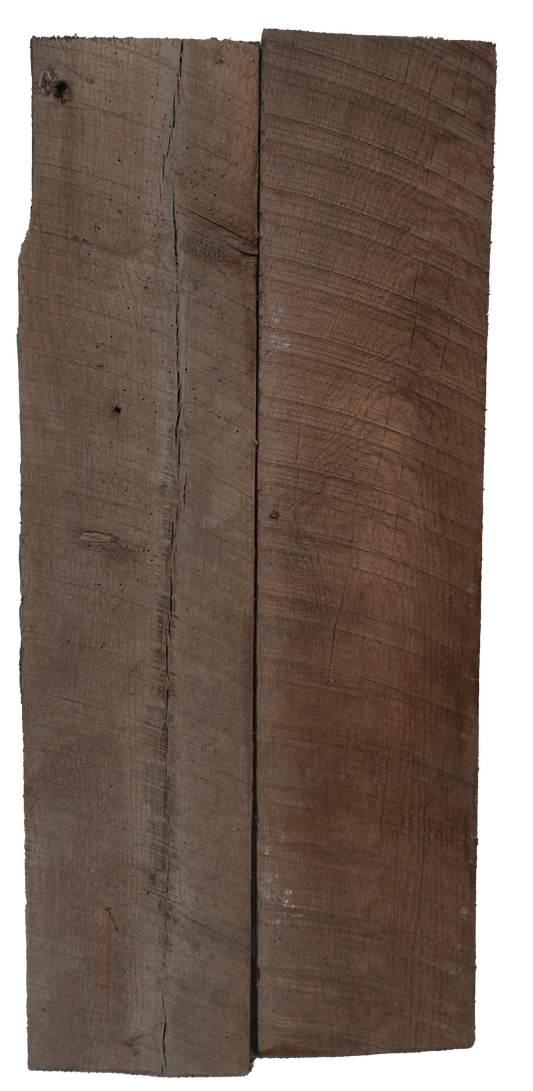
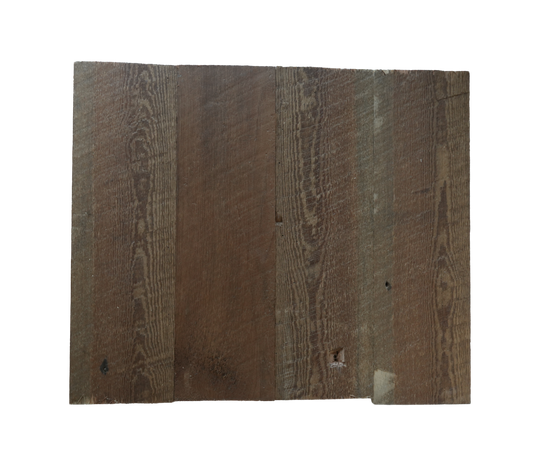
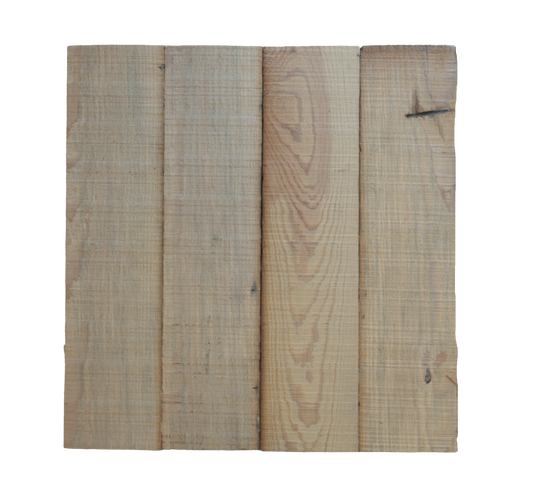
Reclaimed wood flooring is not a manufactured product. Every batch has its own history, character and tolerances. Variations in color, grain, dimensions, surface texture, nail holes, checking, knots and previous wear are part of the material and should be expected.
When properly selected, prepared and installed, reclaimed flooring can perform beautifully for generations. The key is understanding the material before installation begins.
Before You Purchase
Whenever possible, determine the total square footage required before purchasing reclaimed flooring.
Unlike new flooring, matching material may not be available later. We generally recommend purchasing 10–15% more than the measured square footage to account for cuts, grading, damaged ends and installer selection. Complicated layouts, diagonal installations or material with significant dimensional variation may require additional waste.
Before ordering, confirm:
- Board width and thickness
- Random-width or fixed-width configuration
- Tongue-and-groove or square-edge construction
- Finished face versus original surface
- Species, when known
- Approximate quantity available
- Whether additional milling or finishing will be required
For larger projects, we recommend having your installer review the material specifications before purchase.
Expect Variation
Variation is one of the defining characteristics of reclaimed flooring.
Depending on the material, boards may contain nail holes, knots, checking, saw marks, color variation, worn edges, filled areas, previous fastener locations and other evidence of their former use.
Boards may also vary slightly in width, thickness and straightness, particularly when the material retains original edges or has not been completely remilled.
These characteristics should be considered during both design and installation rather than treated as defects.
Acclimation
Reclaimed wood should be allowed to acclimate to the environment where it will be installed.
The building should be fully enclosed and operating under normal conditioned temperature and humidity before flooring is delivered for final acclimation.
Rather than relying only on a predetermined number of days, the installer should check the moisture content of both the flooring and the subfloor with an appropriate moisture meter. Installation should begin only when conditions are suitable for the species, subfloor and local environment.
Wood continues to respond to changes in humidity throughout its life. Proper acclimation and moisture management are particularly important in humid climates.
Inspect and Sort Before Installation
Open and inspect the material before installation begins.
We recommend laying out and sorting boards so the installer can intentionally distribute variations in color, grain, wear and character throughout the room.
This is also the time to identify boards that may need:
- End trimming
- Minor straightening or fitting
- Thickness adjustment
- Fastener removal
- Filling or repair
- Selective placement
A good reclaimed-floor installation is partly craftsmanship and partly composition. The installer should work from multiple bundles or stacks rather than installing one bundle at a time.
Subfloor Preparation
The subfloor should be structurally sound, clean, dry and sufficiently flat for the intended installation method.
The appropriate assembly will depend on the flooring, subfloor and building conditions. Reclaimed flooring may be installed over plywood, sleepers or other approved assemblies depending on the project.
Concrete slabs require particular attention to moisture. Wood flooring should not be installed over a slab without properly evaluating slab moisture and specifying an appropriate vapor-control and installation system.
Installation
Installation methods vary according to the flooring profile, thickness, width and substrate.
Depending on the material, reclaimed flooring may be:
- Blind-nailed or stapled
- Face-nailed
- Glued
- Installed using a combination of adhesive and mechanical fastening
Wide-plank flooring often requires different fastening and moisture-management considerations than narrower flooring.
Expansion space should be incorporated where appropriate to allow for seasonal movement.
Because reclaimed flooring varies from batch to batch, the installer should determine the final fastening pattern, adhesive, expansion requirements and installation method after inspecting the actual material and site conditions.
Sanding & Surface Preparation
Not every reclaimed floor should be sanded perfectly smooth.
Original saw marks, worn surfaces, oxidation and subtle irregularities are often what make reclaimed flooring desirable in the first place.
Before sanding, determine how much of the original surface you want to preserve.
Some floors may need only light screening or cleaning. Others may require more substantial sanding to create a consistent walking surface.
Aggressive sanding can permanently remove decades or centuries of character, so this decision should be made intentionally before work begins.
Finishing
Reclaimed flooring can accept many traditional and modern wood finishes, including oils, hardwax oils and film-forming finishes.
Always test the proposed finish on several pieces before applying it to the entire floor.
Older wood can react differently to stains and finishes because of previous finishes, oxidation, mineral content, age and species variation. A sample made from new lumber is not an adequate substitute for testing the actual reclaimed material.
Radiant Heat
Some reclaimed wood flooring can be installed over radiant heating systems, but compatibility depends heavily on the species, board width, moisture content, milling and heating system.
Do not assume a reclaimed floor is suitable for radiant heat without reviewing the specific material and assembly with the flooring installer and radiant-system manufacturer.
Choosing an Installer
Reclaimed flooring rewards an experienced installer.
We strongly recommend working with a flooring professional who is comfortable with solid wood, wide-plank and reclaimed flooring, rather than assuming the material will install exactly like modern prefinished flooring.
The installer should inspect the material before beginning work and be comfortable making field decisions regarding sorting, fitting, fastening, moisture and finishing.
A Note From Green Pirogue
Reclaimed materials require a little more thought than new materials. That is also part of what makes them special.
The irregularities, repairs, wear and variation are evidence of a previous life and are often impossible to reproduce convincingly with newly manufactured products.
Our goal is to help you understand what you are purchasing before it reaches the jobsite. If you are considering reclaimed flooring for a project, we are happy to provide available dimensions, photographs and material information for review by your designer, builder or installer before purchase. Don't hesitate to reach out to us if considering reclaimed flooring for your home.